
Finding future leaders is only half the job.
For HR teams, the bigger challenge is preparing high-potential employees to handle the reality of leadership. Being excellent at your current role does not automatically mean you are ready to manage people, influence stakeholders or handle difficult conversations.
This is where executive coaching can make a difference.
From potential to performance
Executive coaching gives emerging leaders a space to reflect on how they work, understand their strengths and recognise the behaviours that may hold them back.
For example, someone may be technically strong but struggle to delegate. Another may have excellent ideas but lack confidence when challenging senior colleagues. Coaching helps them work on these areas in the context of their actual role.
The goal is not simply to make someone a better employee. It is to prepare them for the demands of leadership.
Leadership needs to be practised
Knowing what to do in a difficult situation is very different from actually doing it.
Future leaders will eventually have to give challenging feedback, manage conflict, influence others and make decisions under pressure. These situations are difficult to learn from a textbook.
This is where experiential learning can complement executive coaching.
At Actors in Industry, leaders can practise realistic workplace situations through role play and simulation. They can try different approaches, receive feedback and reflect on what worked before facing the same situation in real life.
Coaching before the promotion
HR teams do not have to wait until someone becomes a manager to start developing their leadership skills.
Coaching can be particularly valuable during the transition into leadership, helping employees build the confidence and behaviours they will need before the responsibility arrives.
When coaching is combined with practical experience, future leaders are not simply told what good leadership looks like. They get the opportunity to practise it.
How We Put Leadership Development Into Practice
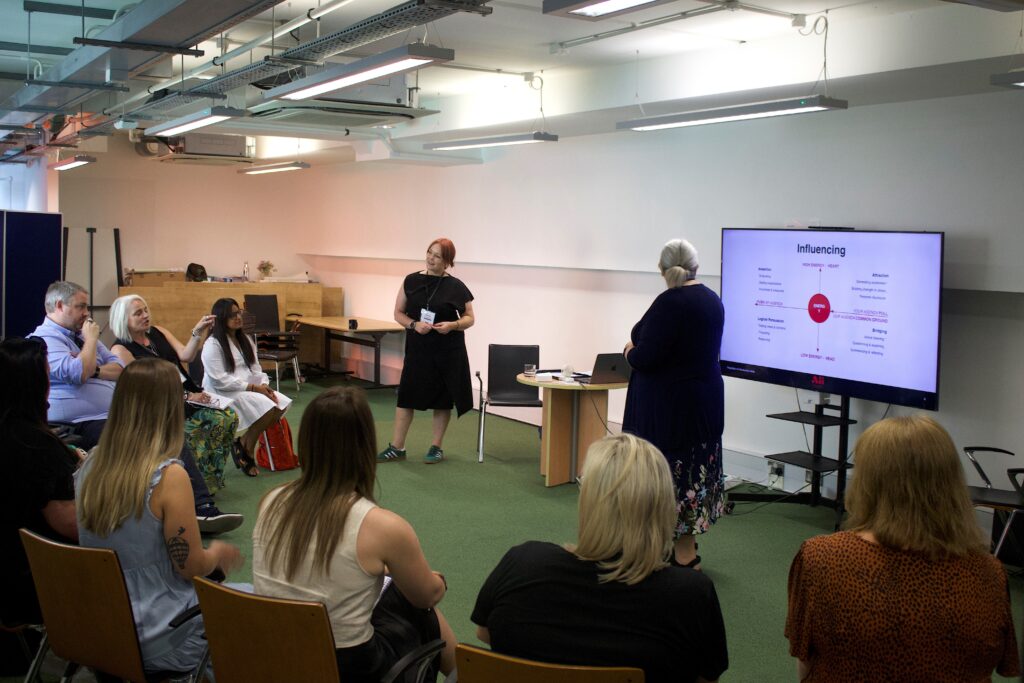
For HR teams, developing future leaders means creating opportunities to practise the skills they will need in real situations.
That is exactly what we’ve been doing this week.
At CBRE, participants practised negotiation conversations through role play, building confidence and receiving feedback from facilitators. At RSM Tax Residential, forum theatre gave participants the opportunity to explore client conversations and consider how different approaches can affect the outcome.
Different organisations. Different development needs. But the same principle: people develop leadership skills by practising them.
Develop Future Leaders Through Experience
Future leaders need more than potential. They need opportunities to practise leading.
Through role play, simulation and facilitated practice, future leaders can build confidence in the conversations, decisions and challenges they will face in the workplace.
At Actors in Industry, we help organisations develop these skills through realistic, experiential learning.
If you’re looking to prepare your next generation of leaders, talk to Actors in Industry about creating a practical leadership development programme for your organisation.