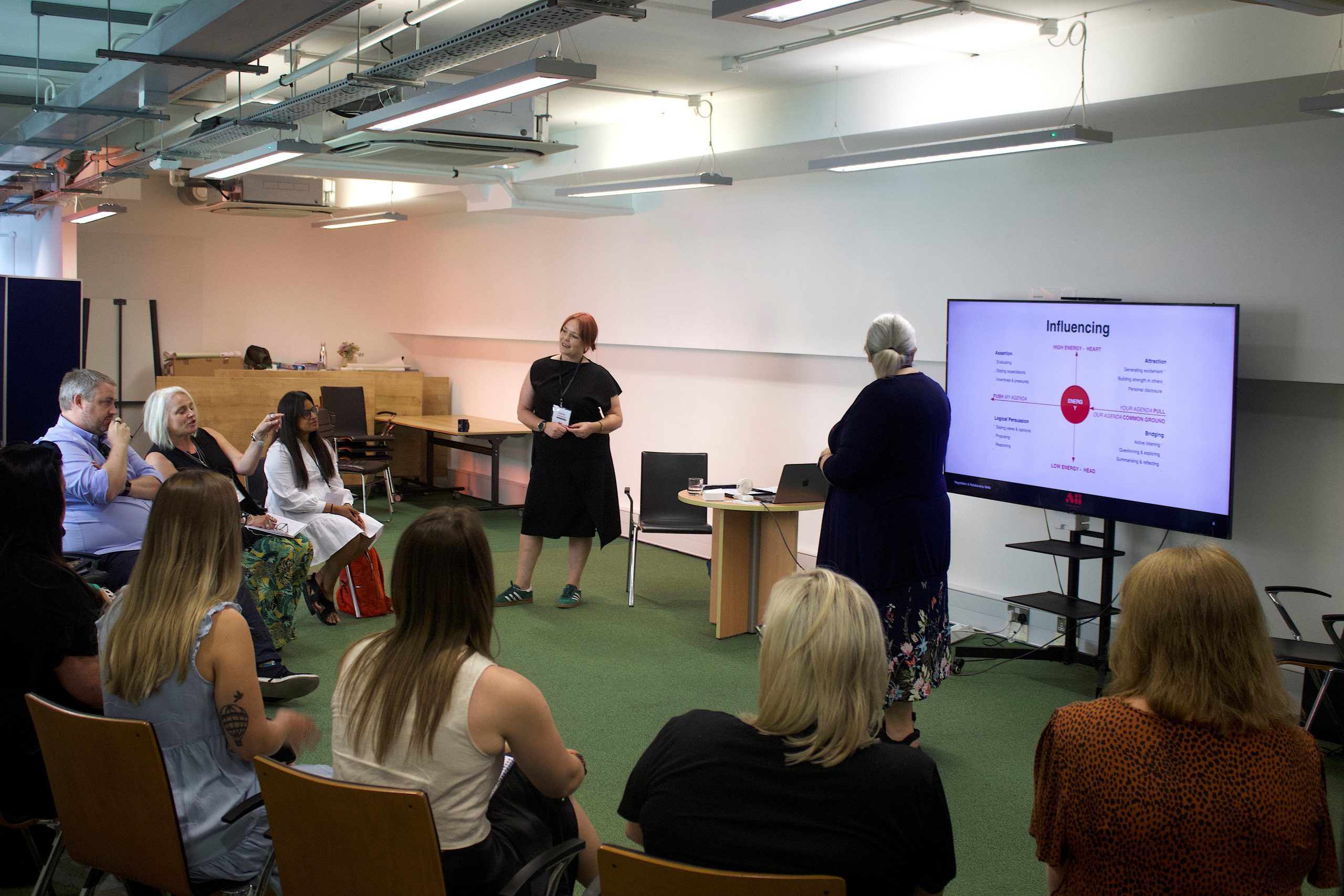

Being a manager or leader often means having conversations you cannot script in advance.
Giving difficult feedback. Challenging poor performance. Managing conflict. Negotiating with stakeholders. Communicating a decision that will not please everyone.
These are not skills people develop simply by sitting through a presentation or reading a leadership handbook.
Confidence comes from experience.
That is why our workshops at Actors in Industry combine practical learning with actor-led practice, giving managers and leaders the opportunity to experience challenging workplace situations before they have to handle them for real.
Confidence Is Built Through Practice
Many leadership programmes focus on what managers should do. Our workshops focus on what managers actually do when the pressure is on.
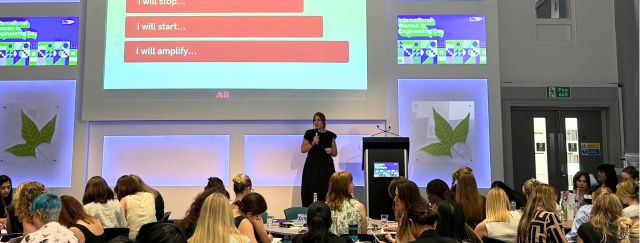
Participants are placed in realistic workplace situations and asked to respond as they would in their day-to-day roles. Professional actors can take on the role of a colleague, direct report, senior stakeholder or customer, creating a realistic conversation that can change depending on how the participant responds.
This makes the learning active rather than theoretical.
A manager might know that they should give clear feedback, for example. But knowing the principle is different from delivering feedback to someone who becomes defensive, emotional or dismissive.
Practice helps bridge that gap.
Putting Leadership Skills Into Real Situations
The situations managers practise should reflect the situations they are likely to face in their roles.
For example, in one leadership development programme within the aviation and hospitality sector, our role-players supported participants as they worked through realistic leadership scenarios. The focus was not simply on understanding leadership principles, but on how those principles translated into behaviour when dealing with other people.
In another difficult conversations workshop within the industrial sector, participants had the opportunity to practise conversations where there was a genuine challenge to address. Having an actor respond realistically meant participants had to listen, adapt and decide how to move the conversation forward rather than rely on a rehearsed script.
We have also supported consulting professionals through programmes focused on negotiation, productive conversations and progression into more senior leadership roles.
The scenarios may differ from one organisation to another, but the underlying challenge is often the same:
How do you communicate effectively when the conversation matters?
A Safe Space to Rehearse Difficult Conversations
One of the biggest barriers to confident leadership is the fear of getting a difficult conversation wrong. In a real workplace conversation, there is often no opportunity to pause, start again and try a different approach.
Our workshops create that opportunity.
Participants can test different ways of communicating, see how the other person responds and receive constructive feedback. They can then try again with a different approach.
This process helps managers develop a greater awareness of:
- How their communication comes across
- How to respond when a conversation takes an unexpected turn
- How to remain composed under pressure
- How to ask better questions
- How to challenge without creating unnecessary resistance
- How to adapt their approach to different people and situations
The aim is not to give every manager a script.
It is to help them develop the confidence to respond effectively when the conversation does not go according to plan.
Turning Leadership Knowledge Into Behaviour
There is often a gap between knowing something and being able to do it.
A manager may understand the importance of active listening but interrupt when faced with a challenging employee.
They may know how to give constructive feedback but soften the message so much that the issue remains unclear.
They may understand the value of empathy but struggle to demonstrate it while also holding someone accountable.
Actor-led practice makes these moments visible.
Participants can experience their own behaviour in action and understand how small changes in language, tone, questioning or body language can alter the direction of a conversation.
That is where learning becomes behavioural.
Realistic Situations. Real Reactions.
Our actors are not simply there to repeat a pre-written script. They can respond to participants based on what they say and how they say it.
If a manager avoids the issue, the conversation can continue in that direction. If they challenge too aggressively, the actor can respond accordingly.
If they ask the right question, the conversation can develop differently. This creates a level of unpredictability that is difficult to replicate through traditional classroom exercises.
It also means participants have to think on their feet, just as they would in real working situations.
Feedback That Helps Managers Improve
Practice becomes more valuable when participants understand why something worked or did not work. Our workshops combine the experience of the scenario with reflection and feedback.
Participants can examine the choices they made, how they were perceived and what they could do differently. They are not simply told whether their response was right or wrong.
Instead, they have the opportunity to explore alternative approaches and understand the impact of their behaviour.
That reflection helps turn a single practice conversation into a skill they can take back into the workplace.
Building Confidence Beyond the Workshop
The goal of an Aii workshop is not for participants to feel confident only inside the training room. It is to help them feel better prepared when the next difficult conversation happens at work.
After practising situations such as giving feedback, managing conflict, influencing others or communicating under pressure, managers have something valuable that theory alone cannot provide:
experience of doing it.
They have already encountered resistance.
They have already tested different approaches.
They have already had the opportunity to get it wrong and try again.
That can make the real conversation feel less unfamiliar.
Confident Leaders Are Not Perfect Leaders
Confidence does not mean always knowing exactly what to say.
Strong managers and leaders still face difficult conversations, unexpected reactions and situations they have never encountered before.
The difference is often in how prepared they feel to deal with them.
By giving managers the opportunity to practise realistic situations, experiment with different approaches and learn from the experience, our workshops help turn leadership concepts into practical behaviours.
Because when people have had the chance to experience a difficult situation before, they are better prepared to face it when it really matters.
Want to develop more confident managers and leaders?
Actors in Industry creates tailored experiential learning programmes using professional actors and facilitators to help people practise the conversations and behaviours that matter most in the workplace.
Explore our workshops or get in touch to discuss what your team needs.