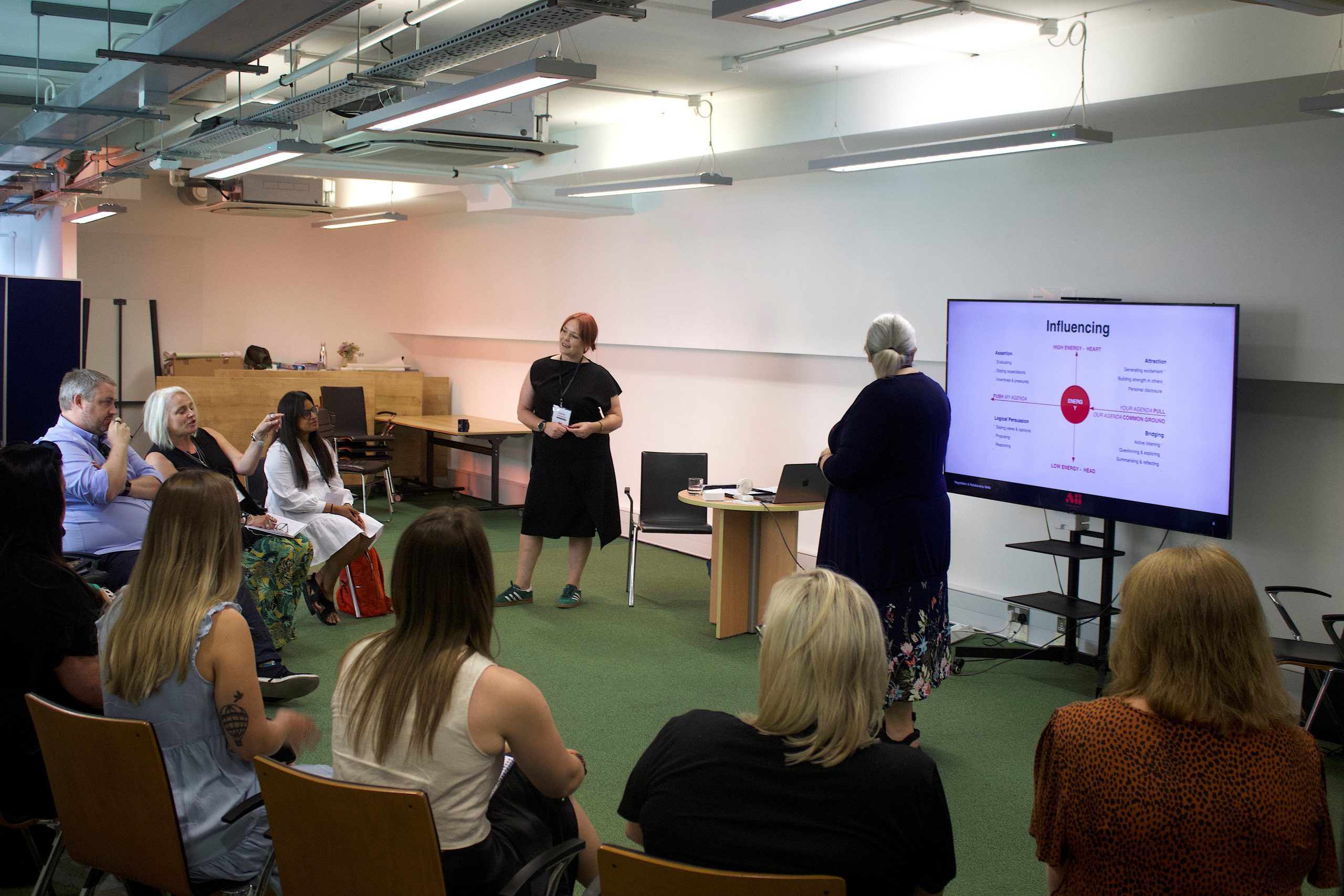

Recently, we welcomed a group of managers from different organisations to experience role play for themselves. The goal wasn’t simply to learn about leadership. It was to step into the kinds of conversations managers face every day and practise them in a safe, supportive environment before having them with their own teams.
Some participants arrived feeling confident. Others admitted they were slightly apprehensive. After all, role play often carries the misconception that it’s about acting.
Within minutes, that perception changed. The conversations felt real. The challenges felt familiar. And the learning felt immediately relevant.

When Leadership Becomes Real
Throughout the workshop, managers found themselves navigating situations they recognised from their own workplaces. A difficult performance conversation. An employee resisting change. A team member who had lost motivation.
Instead of discussing what they might do, participants had the opportunity to try different approaches, receive feedback and immediately see how their communication influenced the outcome.
For many, it was the first time they had been able to practise these conversations without worrying about getting them wrong.
Discovering the Power of Perspective
One of the biggest takeaways from the day came from seeing situations through another person’s eyes.
As professional role players responded naturally to each conversation, managers quickly realised how small changes in their communication could completely alter the direction of an interaction.
A different question. A pause instead of an immediate solution. Listening a little longer. These seemingly minor adjustments often created entirely different outcomes.
Several participants commented that they hadn’t realised how their communication style was being interpreted until they experienced it first-hand.
Confidence Built Through Practice
As the workshop progressed, something else became noticeable. The hesitation that many participants brought into the room gradually disappeared.
Instead of searching for the “perfect” response, they focused on understanding the other person and adapting as the conversation evolved.
That’s exactly what effective leadership requires. Not memorised scripts, but the confidence to respond thoughtfully in the moment.
Why Experiential Learning Makes the Difference
Leadership isn’t developed by watching someone else do it. It’s developed by doing it YOURSELF.
Role play gives managers the opportunity to experiment, reflect and improve in an environment where mistakes become valuable learning opportunities rather than workplace problems.
The Ripple Effect Back at Work
When managers become better communicators, their teams notice.
What begins as one manager developing new skills often leads to stronger collaboration, higher engagement and healthier team relationships.
What Participants Left With
It was fantastic to see so many managers embrace the experience with openness and curiosity.
Watching participants grow in confidence over the course of the session reinforced something we’ve seen time and again.
By the end of the workshop, managers weren’t leaving with a checklist of leadership theories. They were leaving with practical experience, greater self-awareness and the confidence to handle the conversations that matter most. That’s the value of experiential learning, it prepares people for the real world, not just the classroom.
If you’d like to stay up to date with our latest workshops, events and insights on experiential learning, follow us on LinkedIn. We’d love to have you join the conversation.
Frequently Asked Questions
1. What is professional role play in leadership training?
Professional role play uses trained actors to recreate realistic workplace situations, allowing managers to practise challenging conversations in a safe and supportive environment. It helps participants develop practical leadership and communication skills through experience rather than theory alone.
2. How does role play help managers become better leaders?
Role play gives managers the opportunity to practise giving feedback, managing conflict, coaching employees and leading difficult conversations before they happen in the workplace. This builds confidence, self-awareness and stronger communication skills.
3. Who is leadership role play suitable for?
Leadership role play is valuable for first-time managers, experienced leaders, senior executives and anyone responsible for leading people. It can also support high-potential employees preparing for management roles.
4. Why use professional actors instead of colleagues during role play?
Professional role players create realistic, unbiased scenarios and respond authentically to participants’ behaviour. This provides a more immersive learning experience and enables managers to receive honest feedback in a psychologically safe environment.